Ceiling Water Damage Repair Cost in Tucson
Ceiling water damage repair cost in Tucson depends on what caused the leak, how far the water spread, whether insulation and drywall can be dried or must be replaced, and how much finish work the ceiling needs. Fixing the source comes first. Call to be connected with a local provider who can inspect and give you a written quote.
- The EPA says water-damaged areas and items should be dried within 24-48 hours to prevent mold growth.
- The Arizona Department of Health Services says the moisture source must be removed first, or mold will return when the area gets wet again.
- Arizona DIFI advises taking photos of damage before any water mitigation, plumber or restoration contractor shows up.
- DIFI says it is your right to get more than one quote and advises making sure the contractor is licensed in Arizona.
- The National Weather Service defines the Southwest monsoon as June 15 through September 30, when many Tucson roof leaks first show up on ceilings.
What affects ceiling water damage repair cost in Tucson?
Ceiling water damage repair cost in Tucson is driven by five things: the source of the water, the size of the wet area, what is above the ceiling, how long the water sat, and the finish you want at the end. A small stain from a one-time drip is a very different job from a sagging ceiling under a failed roof seam.
Here is how each driver changes the scope:
- Source: a roof, swamp cooler, AC drain line or plumbing pipe each needs its own fix before the ceiling is touched.
- Spread: water travels along joists and drywall seams, so the wet area is often larger than the stain.
- Materials: soaked insulation, drywall, plaster or textured finishes each add steps.
- Time: a fresh leak can often be dried; an old one may mean mold or rot.
- Finish: matching texture and paint across a whole room takes more labor than a single patch.
Why does the leak source change the price of the repair?
The leak source changes the price because the ceiling cannot be repaired until the water stops for good, and every source needs a different trade. A roofer handles a roof leak, a plumber handles a pipe, and an HVAC or cooler technician handles a drain line or cooler pan.
Common sources over Tucson ceilings include:
- Flat or low-slope roofs that pond water during heavy storms. See our guide on roof leak water damage.
- Roof-mounted evaporative coolers. Tucson Water says hard water causes calcium deposits to build up in evaporative coolers, which can clog parts over time.
- AC condensate lines and drip pans in attics. The EPA advises keeping drip pans clean and drain lines unobstructed and flowing properly.
- Supply lines and pipes running through the attic or a second floor.
If the source repair is simple, more of the budget goes to the ceiling itself. If the source is hard to reach or keeps coming back, that work adds to the total.
How does the size and spread of the damage affect cost?
The size and spread of the damage affect cost because a provider has to dry, remove or replace every wet area, not just the visible stain. Water that lands on a ceiling runs along joists and pools at low points, so a small brown ring can sit on top of a much wider wet zone.
A provider will usually use a moisture meter and sometimes a thermal camera to map the wet area before giving a quote. That map decides how many panels come down, how much insulation is pulled and how much drying equipment is needed. Damage that also reaches walls, cabinets or flooring below adds more rooms to the scope.
Multiple rooms, a hallway or a ceiling under a bathroom all tend to raise the quote because each adds cutting, drying and finishing time.
Need help now? Call to be connected with a local provider in Tucson who can check availability for your address.
Can a wet ceiling be dried, or does it need to be replaced?
A wet ceiling can sometimes be dried in place if the leak was caught early, the water was clean and the drywall is still firm and flat. If the drywall sags, crumbles, smells musty or shows mold, it is usually cut out and replaced, which adds to the cost.
Drying in place uses air movers and dehumidifiers, often with small holes or a removed section to let air reach the cavity. The EPA says water-damaged areas should be dried within 24-48 hours to prevent mold growth, so speed matters. Learn more about structural drying and dehumidification and how it compares with tearing out and replacing.
Wet insulation above the ceiling is the hidden cost. Fiberglass batts and blown insulation hold water and usually have to be removed so the space can dry.
Does a sagging or stained ceiling cost more to fix?
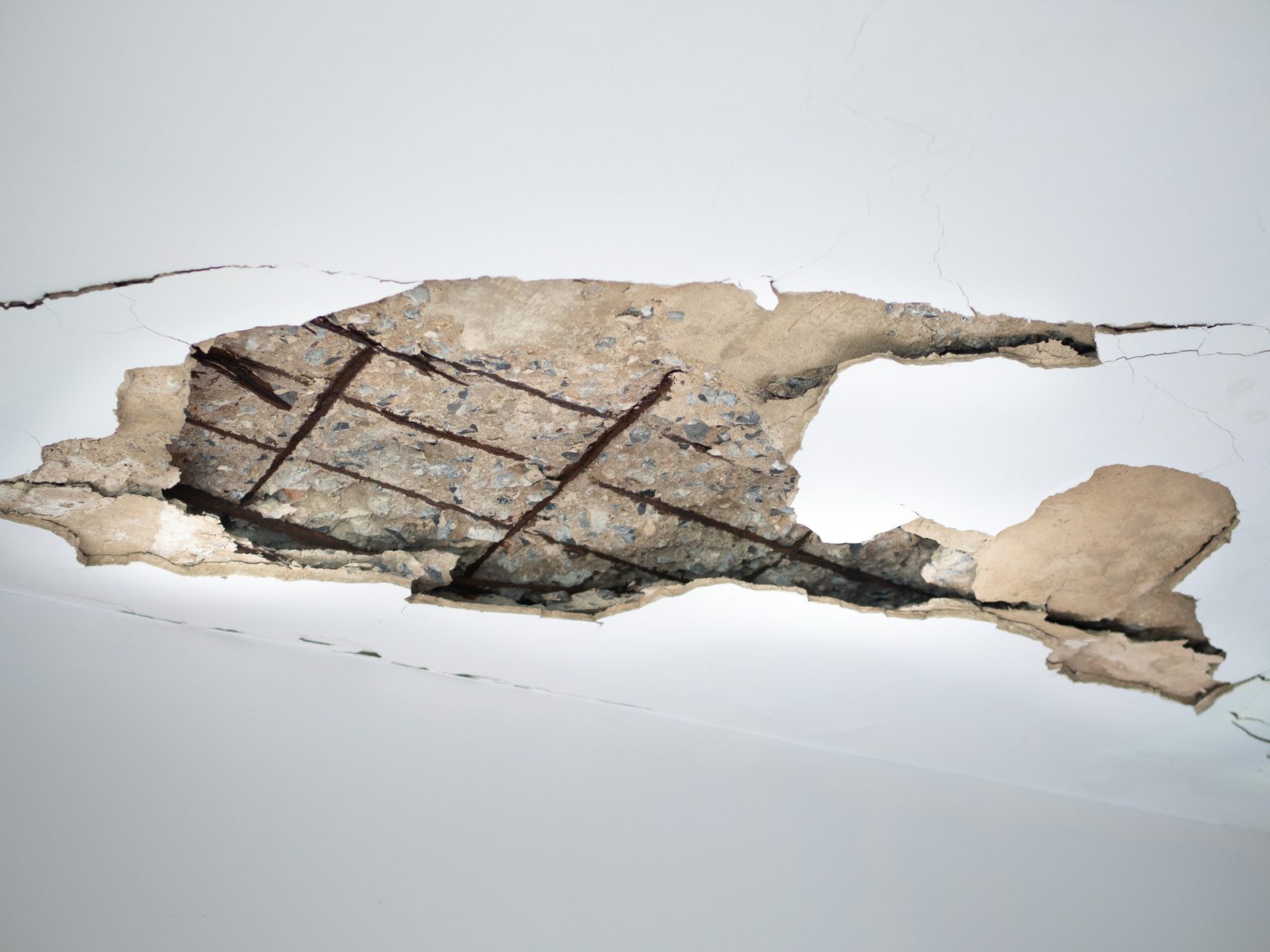
A sagging ceiling usually costs more to fix than a stain alone, because sagging means the drywall has absorbed enough water to lose strength and will likely be replaced. A stain on a ceiling that is still firm may only need drying, stain-blocking primer and paint once the source is fixed.
Treat a sagging or bulging ceiling as a safety issue. Keep people and pets out of the room, move valuables if you can do it safely, and turn off power to light fixtures in the wet area. Do not poke a bulge yourself if you are unsure what is above it. Call to be connected with a local provider instead.
Plaster ceilings in older homes and popcorn or heavy-texture finishes also raise the scope, since matching them takes more skill and time than flat drywall.
How does mold change ceiling water damage repair cost?
Mold changes ceiling water damage repair cost because moldy materials must be removed and the area cleaned before any rebuild, which adds steps and sometimes containment. The longer a leak goes unnoticed, the more likely this becomes.
The Arizona Department of Health Services does not recommend mold testing as the first step and says that if you can see or smell mold, you have a problem. ADHS also says it is critical to remove the source of moisture first, because mold will return if the area becomes wet again. The EPA says that if a moldy area is less than about 10 square feet, homeowners can usually handle cleanup themselves; larger areas are a job for a provider.
If you see spotting above a ceiling stain or notice a musty smell, mention it on the call. Read more about mold remediation after water damage.
Will insurance help with the cost of ceiling water damage in Arizona?
Insurance may help with ceiling water damage in Arizona if it came from a sudden or accidental event, but every policy is different. The Arizona Department of Insurance and Financial Institutions (DIFI) says water damage not caused by a flood may be covered by homeowners or renters insurance when it results from a sudden or accidental event, and that your policy spells out what is and is not covered.
Many policies treat sudden damage differently from gradual leaks, so check your policy and document everything. DIFI advises:
- Take pictures before any mitigation, plumber or restoration contractor arrives.
- Call your insurance company or adjuster before calling a contractor, and confirm coverage with the adjuster.
- Keep a log of dates, times, technician names and equipment used, such as dehumidifiers and air movers.
- If you rent, check with your landlord before any repair work begins.
See our water damage insurance claim basics for more.
What happens during the visit and quote?
During the visit, a provider inspects the ceiling and the space above it, explains your options and gives you a written quote before any work starts. You decide what happens next.
A typical visit covers:
- Inspection: finding the source, checking the attic or floor above, and measuring moisture in the ceiling, walls and insulation.
- Explanation of options: drying in place versus removal, what the source repair involves, and what finish work is needed.
- Written quote: a line-by-line scope you can share with your adjuster and compare with other quotes.
DIFI notes that it is your right to get more than one quote, and it warns against high-pressure sales and door-to-door offers you did not ask for. You can check a contractor in the Arizona Registrar of Contractors online contractor search before you sign.
Why Tucson ceilings take on water: local factors
The National Weather Service defines the Southwest monsoon as June 15 through September 30, and NWS says Tucson averages 5.69 inches of rain during that window. That is more than half of Tucson's 1991-2020 normal annual precipitation of 10.61 inches, so many roofs get most of their yearly test in a few short, heavy storms. The 2026 monsoon brought 5.76 inches to Tucson International Airport, with totals across the metro ranging from 3.00 to 8.00 inches and locally up to 12.00 inches.
That uneven rain means a home in Oro Valley or the Catalina Foothills can see a very different storm from one in Sahuarita, Vail or Rita Ranch during a single storm. Winter matters too: Tucson averages 12 days a year with lows of 32°F or colder, which can stress pipes in attics and exterior walls. Providers serve Tucson, Oro Valley, Marana, Sahuarita, Vail, Green Valley and nearby areas.
Related pages
Questions people ask
What is the typical ceiling water damage repair cost in Tucson?
There is no single typical number, because ceiling water damage repair cost in Tucson depends on the leak source, the size of the wet area, insulation and drywall condition, and finish work. A written quote after an inspection is the only reliable figure.
Why do quotes for the same ceiling stain vary so much?
Quotes vary because providers may find different amounts of hidden moisture or plan different repairs. Ask each one to show moisture readings and list what is included, so you compare the same scope.
Is it cheaper to repair a ceiling leak right away or wait until monsoon season ends?
Acting right away is usually cheaper. The EPA says wet areas should be dried within 24-48 hours to prevent mold, and waiting lets water spread into insulation, framing and walls.
Can I just paint over a water stain on my ceiling?
Only after the leak is fixed and the ceiling is fully dry and firm. Painting over a wet stain hides the problem, and the stain usually bleeds back through without a stain-blocking primer.
How do I know if my ceiling drywall needs to be replaced?
Drywall usually needs replacing if it sags, feels soft, crumbles, smells musty or shows mold. Firm drywall with a dry, light stain can often be dried and refinished instead.
Is a sagging ceiling dangerous?
It can be. A sagging ceiling is holding water and may fall. Keep people and pets out of the room, turn off power to fixtures in the area and call to be connected with a local provider.
Does wet attic insulation have to be replaced?
Usually, yes. Soaked insulation holds water against the drywall and framing and dries very slowly, so it is often removed so the space can dry and then replaced.
Will homeowners insurance pay for ceiling water damage in Arizona?
It may, if the damage came from a sudden or accidental event, according to Arizona DIFI. Your policy spells out what is covered, so check it and confirm with your adjuster.
Should I call my insurance company or a repair company first?
Arizona DIFI advises calling your insurance company or adjuster before calling a contractor. Take photos of the damage first, then follow your adjuster's guidance on next steps.
What should I photograph before a ceiling leak is repaired?
Photograph the stain, any sagging, drips, wet floors and damaged belongings, plus the attic or space above if you can reach it safely. DIFI advises doing this before any contractor arrives.
Can a swamp cooler leak cause ceiling water damage?
Yes. A roof-mounted evaporative cooler holds water, and a cracked pan, clogged line or worn part can leak onto the roof deck and ceiling. Tucson Water notes hard water deposits build up in coolers.
Can an AC drain line leak through my ceiling?
Yes. Attic AC units make condensate that drains through a line and pan. The EPA advises keeping drip pans clean and drain lines flowing, because a clog can overflow onto the ceiling.
Does mold make ceiling repair more expensive?
Yes. Moldy drywall and insulation have to be removed and the area cleaned before rebuilding. ADHS says to fix the moisture source first, or mold will return.
Do I need mold testing before fixing a water-damaged ceiling?
Usually not as a first step. The Arizona Department of Health Services says that if you can see or smell mold, you have a problem, and focus should go to fixing moisture and cleanup.
How long does it take to dry a wet ceiling?
It depends on the materials, how much water got in and the drying setup. A provider takes moisture readings and keeps equipment running until the ceiling and framing test dry.
Does textured or popcorn ceiling cost more to repair after water damage?
Usually, yes. Matching popcorn, knockdown or plaster finishes takes more skill and time than flat drywall, and some older textures need testing before they are disturbed.
Can I fix ceiling water damage myself in Tucson?
Small, dry stains on firm drywall can be a DIY paint job once the leak is fixed. Sagging, wet insulation, mold or an unknown source are better handled by a provider.
How do I check if a Tucson contractor is licensed?
Use the Arizona Registrar of Contractors online contractor search. DIFI also advises making sure any contractor doing the work is licensed in Arizona and reminds you that you can get more than one quote.
Why does my ceiling only leak during monsoon storms?
Monsoon storms bring short, heavy rain and strong wind that can push water past worn roof seams, flashing or cooler curbs. NWS says Tucson averages 5.69 inches of rain during the monsoon.
Who do I call for ceiling water damage repair in Tucson?
Call to be connected with a local provider who can inspect the ceiling, find the source and give you a written quote. Call (520) 200-3362.
Talk to someone about your water damage problem
Call to be connected with a local provider who can check availability for your address and explain the next step.