Tracing how far the water went
Moisture meters across the ceiling and down the walls, plus a look in the attic where there is safe access, so the wet area is mapped before anything is opened.
A roof leak shows up indoors long after the rain has stopped. Tucson Flood Restoration handles the inside of that job for Tucson homes and businesses: the wet ceiling, the insulation above it and everything the water ran down on its way to the floor.
Most of these calls come in between July and September, when monsoon storms drive rain sideways under roof tile and drop more water on a flat roof than a dust-packed canale or scupper can carry away. The water then runs along framing until it finds an opening, so the stain on the ceiling is often several feet from the actual hole. Older central and foothills houses with low-slope built-up roofs and parapet walls hide that path especially well, and the first real evidence is a ceiling that has already been wet for weeks.
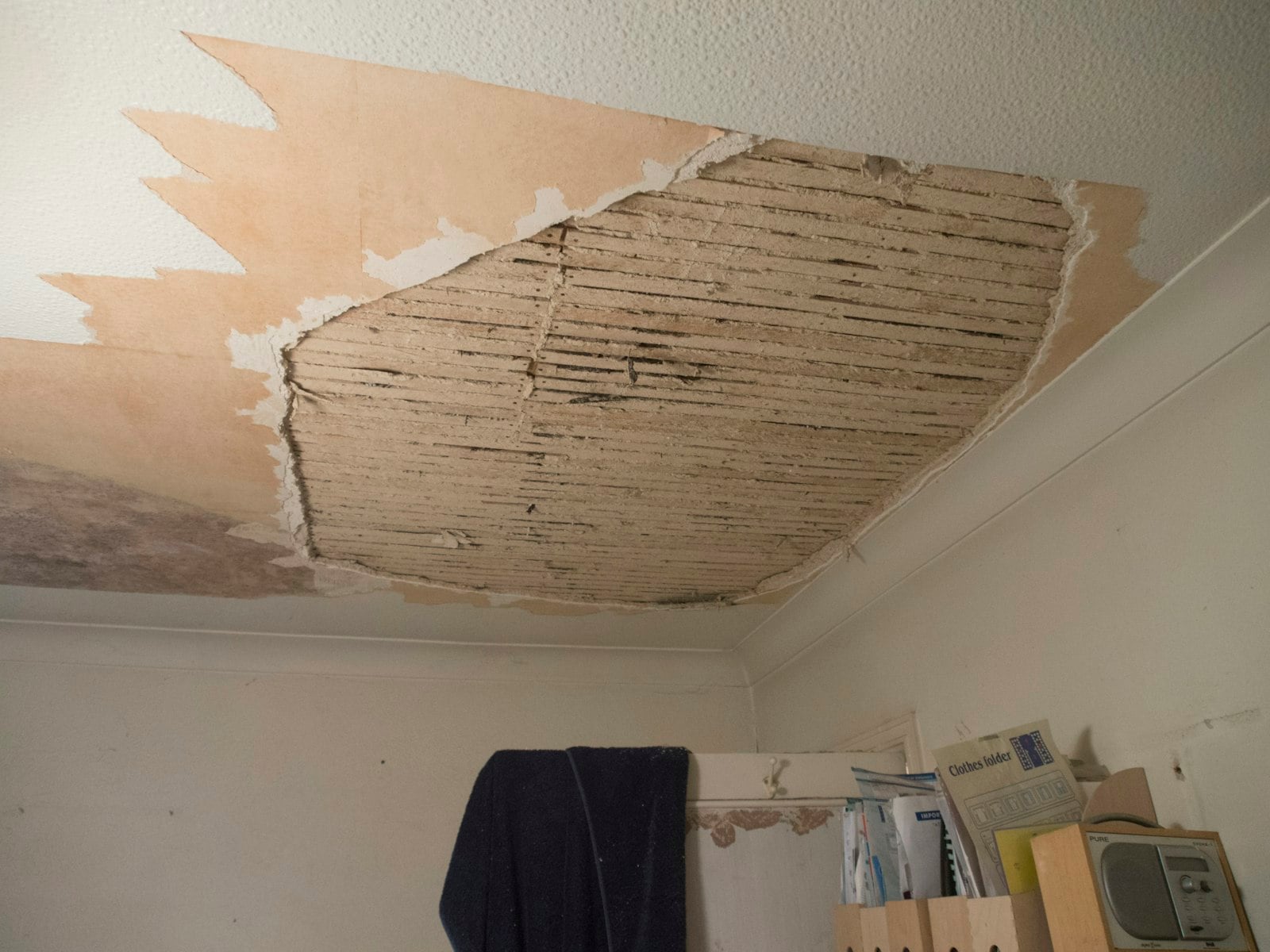
Moisture meters across the ceiling and down the walls, plus a look in the attic where there is safe access, so the wet area is mapped before anything is opened.
Soaked blown-in insulation holds water against the framing and comes out. The affected section of ceiling is opened where it has to be, and sound material is left alone.
Air movers and dehumidifiers run on the wet cavity with readings taken each day. Drywall, texture and paint are quoted separately once the numbers say the structure is dry.
Two trades are involved here, and it helps to know which is which. The roof itself — tile, flashing, a canale, a membrane, or a tarp to get you through the next storm — is roofing work, and Arizona licenses contractors through the Registrar of Contractors, so ask any company you hire for its number. Tucson Flood Restoration takes care of everything under the roof and will tell you plainly when the roofer needs to come first.
If the same storm also pushed water in at ground level, see storm and flood cleanup. Once the leak is stopped the work becomes structural drying, and if the ceiling has been wet for a week or more, read about mold remediation. Whether a ceiling is dried in place or taken out is explained in the restore versus replace guide. Flat-roof homes in the Catalina Foothills and everywhere else on our service areas page see this every monsoon.
How much ceiling and insulation is wet, how many rooms the water reached and whether the material can be dried or has to be removed. Tucson Flood Restoration walks the property, takes readings and gives you the scope and the price before anything is opened up.
No. Tarping and roof repairs are a roofing contractor's work, and getting on a wet tile or foam roof during a storm is not something to do yourself. Tucson Flood Restoration works on the inside — drying the ceiling, walls and floors and putting them back — and will say clearly when the roof has to be sealed before drying is worth starting.
A bulging ceiling is holding water and can come down without warning. Keep people and pets out of the room, do not push on it to test how wet it is, and leave the light or fan in that area switched off. Move what you can from the edges of the room and let a crew open it safely.
Usually yes in the area that got soaked. Wet insulation stays wet for a long time, holds moisture against the framing and drywall under it and slows the whole drying job down. It is removed from the affected section, the cavity is dried and new insulation is part of the repair quote. See how drying works for what happens in between.
Tell us what got wet, where it started and whether the water has stopped, and the right crew and equipment can be sent.