The First 24 Hours
Tucson Flood Restoration explains what to do, what to leave alone and what to write down in the first day after water gets into a Tucson home.
- 24/7 Emergency Response
- Upfront Quotes
- Drying & Repairs
By the Tucson Flood Restoration team · Updated September 2026
Stop the Water First
Everything else waits on this. If the water is coming from a pipe, a fixture or an appliance, close the valve. In most Tucson homes the main shutoff sits on the supply line where it enters the front of the house, often right beside a hose bib, or in the garage near the water softener loop. There is also a meter box out near the street with a valve inside it, which usually needs a meter key. Find yours on a calm afternoon rather than at two in the morning with a flashlight in your teeth.
If the water is coming from the roof during a storm, you cannot stop it. Put containers under the drips, move furniture and electronics out of the path and stay off the roof and off ladders until the weather has passed. A wet tile or flat roof is not a place to be during a monsoon cell.
Deal With Electricity Before Anything Else
Do not walk into standing water in a room where outlets, extension cords, a power strip or an air handler are wet. If you cannot reach the breaker panel without crossing the water, leave it and say so when you call. Nothing in the room is worth an electric shock, and a professional can make the area safe on arrival.
The same caution applies in reverse: do not flip a breaker back on to test whether something still works. Leave it off until the equipment has been checked.
Work Out What Kind of Water It Is
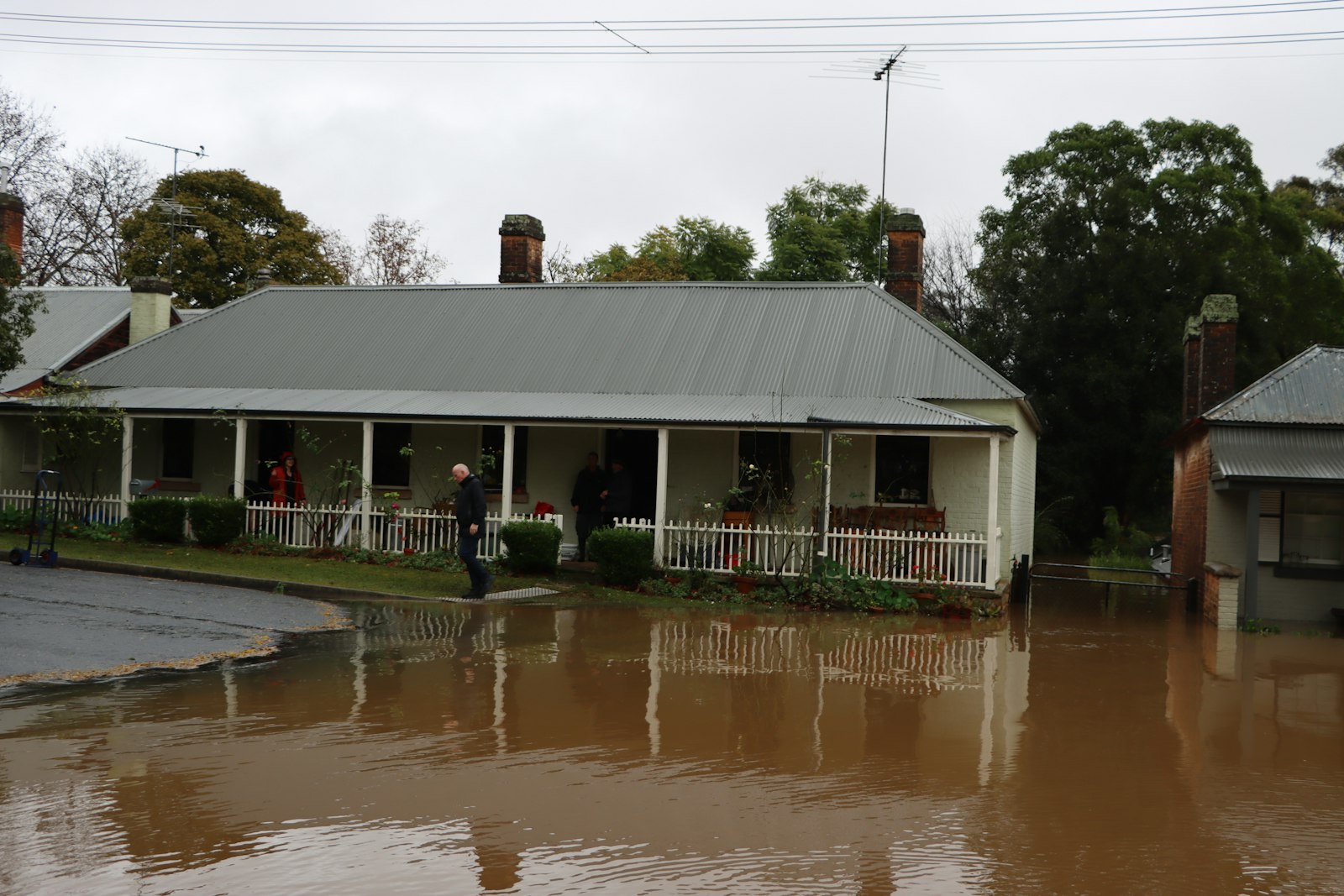
This one decision shapes the whole job. Clean water from a supply line, a water heater or an air conditioning drain pan can often be dried out of the building. Water that came back up a drain is contaminated and has different rules, which is why sewage cleanup involves far more removal. Water that ran across a yard, a street or a wash before it reached the door is treated the same way.
If it was a drain backup or outside water, keep children and pets out of the room, wear closed shoes and gloves if you have to pass through, and leave the air conditioning off so the system does not pull contaminated air through the whole house.
Photograph Everything Before You Move It
Take pictures from the doorway of every affected room before you start pulling things out. Then photograph the source: the split line, the water heater, the ceiling stain, the pan under the air handler. Get the labels and model plates if they are safely reachable. Keep any part that failed.
Write down the time you found it and the time you shut the water off. That single detail does more for a claim than a page of description, because how long it ran drives how much material can be saved.
Move What You Can, Leave What You Cannot
Lift rugs off wet flooring, get electronics and paperwork up, and put foil or blocks under furniture legs so the finish does not bleed into carpet. Open interior doors so air can move between rooms. Leave wet drywall, wet insulation and soaked carpet exactly where they are — pulling material out before it has been recorded costs you evidence and rarely speeds anything up.
A household wet vacuum is fine on a small clean spill. It is not much use once water has reached a wall, because most of the water is now in the pad, the mortar bed and the wall cavity where a vacuum cannot reach. That is what professional extraction is for.
Why the Clock Matters in Tucson
The dry desert air outside is a real advantage once drying equipment is running, and for most of the year a dehumidifier has an easier job here than in a humid state. During the monsoon weeks from July into September that advantage narrows, and a house that was closed up and warm while the water sat loses it entirely. Wet drywall, carpet pad and cabinet bases can start growing mold within a couple of days regardless of what the weather is doing outside.
That is why the first day counts for so much. A clean-water leak caught the same morning usually dries in place. The same leak found after a weekend away often means removal instead. Seasonal homes in Green Valley and elsewhere show this clearly: nothing about the leak changed, only how long it ran.
Arrange an Inspection
Once the water has stopped and the room is safe, get someone to read the building rather than guess at it. Tucson Flood Restoration measures how far the water traveled, explains what can be dried and what has to come out, and gives you the price before anything is removed. Read how a service call runs, compare drying and restoring against replacing, or tell us what happened and we will take it from there.