Tucson Drywall Water Damage: Dry or Replace?
Drywall water damage in Tucson can often be dried in place when the water was clean, the leak was stopped quickly and the board is still firm. Drywall soaked by floodwater or sewage, or wet for days, usually has to be cut out. Call to be connected with a local provider who can test the walls.
- EPA says water-damaged areas and items should be dried in 24-48 hours to help prevent mold growth.
- The Arizona Department of Health Services (ADHS) advises removing sheetrock to at least 12 inches above the high-water mark after flooding.
- ADHS says the moisture source must be removed first, because mold will return if an area gets wet again.
- Arizona DIFI advises taking photos of the damage before any restoration contractor arrives.
- EPA advises keeping indoor relative humidity below 60 percent, ideally between 30 and 50 percent.
Can drywall water damage be dried, or does it have to be replaced?
Drywall water damage can often be dried in place when the water was clean, the wall was wet for a short time and the board is still firm. It usually has to be replaced when the water was dirty, the board is soft or crumbling, or the wall stayed wet long enough to smell musty.
Drywall is a gypsum core wrapped in paper. Clean water from a supply line can be pulled out of the board with dehumidifiers and air movers, especially when a provider opens a few small holes to dry the cavity behind it. The site's guide to dry and restore vs. tear out and replace covers the same choice for floors and cabinets.
How do I know if my drywall is too far gone to save?
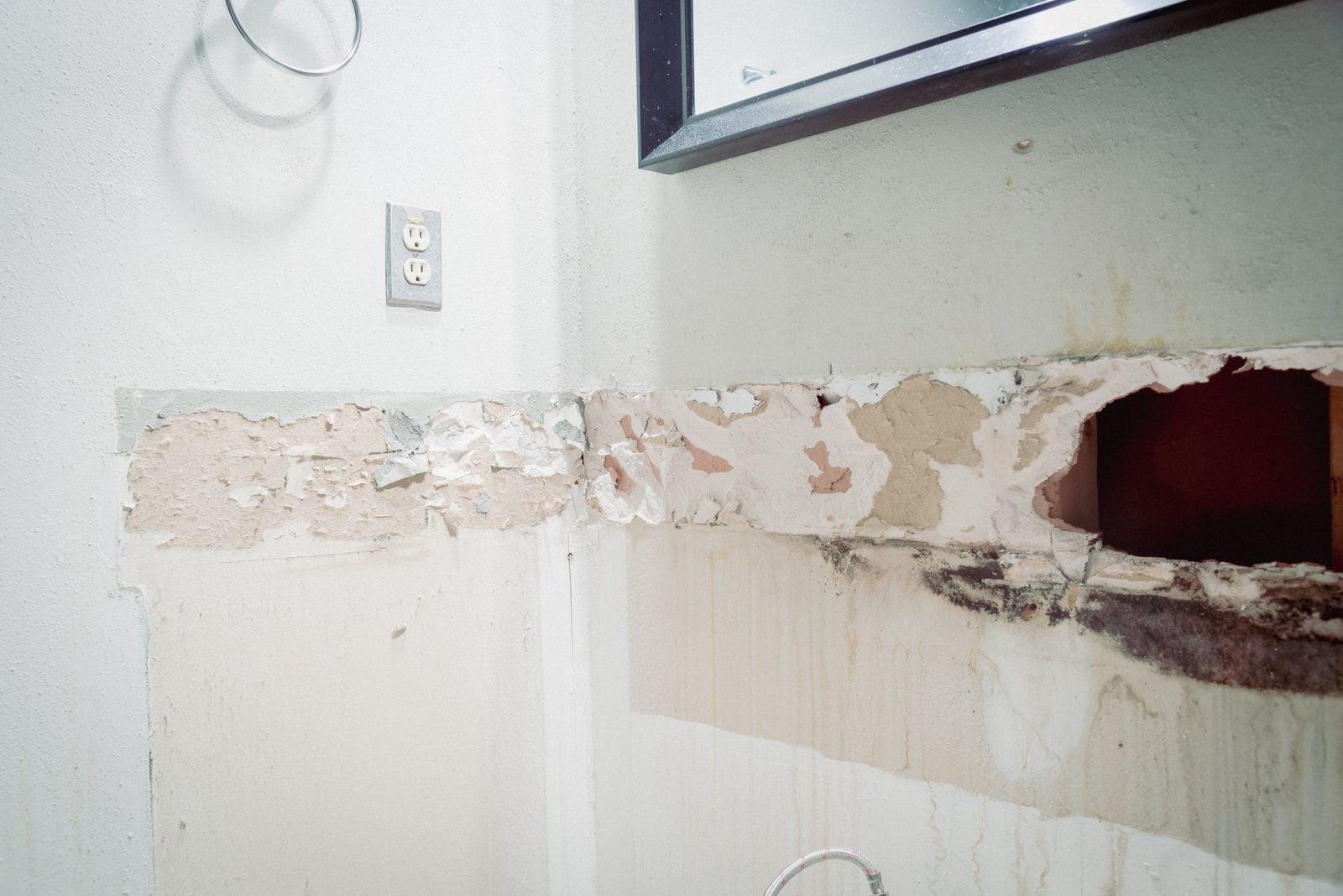
Drywall is usually too far gone when it feels soft or spongy, bulges or sags, has paper peeling off the face, or crumbles when pressed. A musty smell or visible mold on the board is another strong sign it should come out.
- Press test: push gently with a thumb. Firm board may be dryable; soft board usually is not.
- Shape: swelling at the bottom edge or a ceiling that sags means the core has taken on a lot of water.
- Smell: ADHS says that if you can see or smell mold, you have a problem, and it does not recommend testing as the first step.
- Hidden side: insulation and the back of the board can stay wet long after the painted face looks dry.
Does it matter where the water came from?
Yes. Where the water came from is the biggest factor in whether wet drywall can be saved. Clean water from a supply line or ice maker is the most likely to dry in place. Dirty water from outside, a toilet overflow or a sewer backup usually means the wet board is removed.
Providers often sort water into three groups:
- Clean water: a burst supply line, a leaking water heater or a sink overflow caught right away. See burst pipe and leak cleanup.
- Gray water: washing machine or dishwasher discharge, or clean water that sat long enough to pick up dirt.
- Black water: monsoon runoff, floodwater from the yard or street, and sewage. See sewage backup cleanup.
Clean water does not stay clean. The longer it sits in a wall, the more likely the board needs to come out.
Need help now? Call to be connected with a local provider in Tucson who can check availability for your address.
How long can drywall stay wet before it needs to come out?
The shorter the better. EPA says water-damaged areas and items should be dried in 24-48 hours to help prevent mold growth, so drywall that has been wet much longer than that is a strong candidate for removal.
Time matters even in a dry desert city. Tucson's outdoor air does not reach inside a closed wall cavity, behind baseboards or under a bathroom vanity. If a slow leak has been wetting the same wall for weeks, plan on cutting out the damaged section.
How much drywall gets cut out after a flood in Tucson?
After flooding, ADHS advises removing all sheetrock to at least 12 inches above the high-water mark. Many providers make a straight cut a little higher so the patch lines up neatly and the cavity behind it can dry.
ADHS notes that this step may need a licensed contractor. For storm runoff that entered the home, the site's storm and flood damage cleanup page explains the wider process, including structural drying of the studs and slab before new board goes up.
Can I fix drywall water damage myself?
You can handle a small area of drywall water damage yourself if the water was clean, the leak is fixed and the board is still firm. Larger areas, dirty water, ceilings and anything with visible mold are better left to a provider with moisture meters and drying equipment.
EPA says homeowners can usually clean up a moldy area of less than about 10 square feet, roughly a 3 ft by 3 ft patch, themselves. Before you patch or paint, make sure the wall is truly dry.
What happens during the visit?
During the visit, the provider inspects the wet walls and ceilings, finds where the water came from and takes moisture readings to map how far it spread. They explain which sections can be dried in place and which should be removed, then give you a written quote before any work begins.
- Inspection: moisture readings along the wall, at the baseboard and in nearby rooms and closets.
- Options explained: drying in place with small vent holes, a partial cut-out, or full removal, and why each fits your situation.
- Written quote: the scope of work in writing so you and your insurer can review it first.
You can read more on how it works. Ask questions until the plan makes sense.
How do I document wet drywall for an insurance claim?
Photograph every wet wall and ceiling, the water line or stain edges, and the source of the leak before anything is cut or moved. Arizona's Department of Insurance and Financial Institutions (DIFI) advises taking pictures before any restoration contractor shows up.
DIFI also suggests keeping a log of dates, times, technician names and equipment used, such as dehumidifiers, air movers and moisture detectors. DIFI advises calling your insurance company or adjuster before calling a contractor and confirming coverage with the adjuster. Many policies treat sudden damage differently from gradual leaks, so check your policy and document everything.
Why drywall gets wet in Tucson homes
The National Weather Service defines the Southwest monsoon as June 15 through September 30, and NWS says Tucson averages 5.69 inches of rain during the monsoon. Heavy storms push water under doors and through roofs into walls.
Monsoon totals vary a lot across the metro. The 2026 monsoon brought 5.76 inches to Tucson International Airport, with totals ranging from 3.00 to 8.00 inches and locally up to 12.00 inches. A home in Catalina Foothills and one in Rita Ranch can see very different storms on the same night.
Tucson Water says hard water causes calcium deposits to build up in evaporative coolers and water heaters, and University of Arizona Extension says swamp coolers send humidified air into the living space. A cooler line or water heater leak can wet drywall quietly for weeks. Providers serve Tucson, Oro Valley, Marana, Vail, Green Valley and nearby areas.
Related pages
Questions people ask
What should I do first about drywall water damage in Tucson?
Stop the water source, then take photos of the wet walls before anything is moved. Call your insurer and call to be connected with a local provider who can take moisture readings.
Can wet drywall dry out on its own in a dry climate like Tucson?
Sometimes the face dries, but the back of the board and the wall cavity often stay wet. Air movers, dehumidifiers and moisture readings are the way to confirm the whole wall is dry.
How can I tell if the inside of my wall is still wet?
A moisture meter is the reliable way to tell. Soft spots, peeling tape, swelling near the baseboard or a musty smell are also signs the wall is still holding water.
Is it okay to paint over a water-stained wall once it looks dry?
Only after moisture readings show the wall is dry and the leak is fixed. Painting over damp drywall usually leads to stains or blisters coming back.
Do I have to replace drywall that got wet from a burst pipe?
Not always. Clean water from a supply line, caught quickly, can often be dried in place if the board stays firm and moisture readings drop to normal.
Can drywall soaked by monsoon floodwater be saved?
Usually not. Floodwater from outside is dirty, and ADHS advises removing sheetrock to at least 12 inches above the high-water mark after flooding.
Does wet insulation behind drywall have to come out too?
In most cases, yes. Wet insulation holds water against the studs and the back of the board, which slows drying and can lead to odor.
Why do restoration providers drill small holes at the bottom of a wet wall?
Small holes let dry air into the wall cavity so it can dry from the inside. They are usually behind the baseboard and are patched once the wall tests dry.
Can a swamp cooler leak cause drywall water damage?
Yes. A leaking cooler line or overflowing pan can wet ceilings and walls, and Tucson Water says hard water builds up deposits in evaporative coolers.
Will mold grow behind wet drywall in Tucson?
It can if the wall stays wet. EPA says water-damaged areas should be dried in 24-48 hours to help prevent mold growth, even in a dry climate.
Should I test for mold before deciding to replace water-damaged drywall?
Testing is not usually the first step. ADHS does not recommend mold testing first and says that if you can see or smell mold, you have a problem.
Does homeowners insurance pay for water-damaged drywall in Arizona?
It depends on your policy and the cause. Arizona DIFI says damage not caused by a flood may be covered if it was sudden or accidental, so confirm with your adjuster.
Should I cut out wet drywall before the insurance adjuster comes?
Take photos first and talk with your insurer before removing anything. Arizona DIFI advises calling your insurance company or adjuster before calling a contractor.
Who should I call for drywall water damage in Tucson?
Call to be connected with a local provider who can find the source, test the walls and explain whether to dry or replace. Call your insurer too.
Do I need a licensed contractor to replace drywall in Arizona?
Often, yes. Arizona law makes it unlawful to act as a contractor without a license unless an exemption applies, and DIFI advises making sure any contractor is licensed.
Talk to someone about your water damage problem
Call to be connected with a local provider who can check availability for your address and explain the next step.